
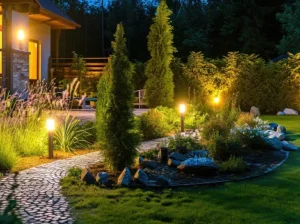
 A well-lit landscape adds beauty and security to your home, but creating a truly captivating atmosphere requires more than just placing a few lights around the yard. The secret to a professional, high-end look is layering. This involves combining different types of light to build depth, drama, and visual interest. Without a thoughtful plan, lighting can look flat or create harsh, unwelcoming glares. This post will explore simple layered lighting techniques to help you achieve a stunning nighttime ambiance.
By understanding the three main layers of outdoor lighting—ambient, task, and accent—you can transform your property. We’ll provide effective landscape lighting design ideas to guide you through the process. Continue reading to learn how to combine these elements for a balanced and beautiful outdoor space that feels like a private resort.
The Three Layers of Outdoor Lighting
Creating a dynamic and inviting outdoor space at night is all about balance. Just like in interior design, layering light is fundamental to achieving a polished and functional result. Understanding how to design landscape lighting involves more than just selecting fixtures; it’s about knowing what each light should do. The goal is to combine three distinct types of lighting to create a cohesive and visually appealing scene.
1. Ambient Lighting (The Foundation)
This is the general, overall illumination that provides a soft base layer of light. It ensures safe navigation and creates a welcoming glow. Think of it as a substitute for moonlight. Use downlights from trees or eaves, or wide-beam floodlights to wash large areas with gentle light. This is a core part of any landscape lighting design guide.
2. Task Lighting (The Functional)
Task lighting is more focused and is used for specific activities. This includes lighting for outdoor kitchens, grilling areas, steps, and pathways. The primary purpose is safety and usability. Integrated step lights and focused path lights are excellent examples of functional task lighting, ensuring you can see what you’re doing.
3. Accent Lighting (The Drama)
This is where the magic happens. Accent lighting draws attention to your yard’s best features, like beautiful trees, architectural details, fountains, or garden sculptures. Techniques like uplighting and silhouetting create focal points and add depth. Following good landscape lighting design guidelines for accent lights is key to effective ambiance creation.
The Importance of a Professional Plan
While these outdoor light layering tips provide a great starting point, translating them into a cohesive design can be complex. A professional lighting designer knows how to balance the three layers perfectly to match your property’s unique characteristics. They understand the technical side, like selecting the right beam spreads, color temperatures, and fixture placements to avoid glare and hotspots. Working with an expert ensures your landscape lighting design ideas become a reality, resulting in a system that is both beautiful and efficient. They will create a customized plan that maximizes visual impact while respecting your budget and practical needs, delivering a truly professional finish.
Bringing Your Vision to Light
At Showcase Lighting LLC, we excel in creating layered lighting schemes that transform outdoor spaces into breathtaking nighttime scenes. Our team understands the art and science behind landscape lighting design ideas, using a client-centric approach to develop a plan that reflects your style and enhances your home’s architecture. We are experts in crafting beautiful, functional, and secure environments through light.
Our commitment is to quality, from the initial design concept to the final installation. We use premium fixtures and proven techniques to ensure your lighting system is durable and stunning. We believe a well-lit home is a more enjoyable home. Let us help you create an outdoor ambiance that you’ll love for years to come.
Frequently Asked Questions
What is the first step in layering outdoor light?
Start with ambient lighting. This foundational layer provides overall illumination and sets the general mood for the entire space before you add other layers.
How do I avoid my lighting from looking flat?
Use a mix of uplighting and downlighting. This creates interesting shadows and highlights, adding depth and dimension that prevent a flat, one-dimensional look.
What is the most important layer of lighting?
All three layers—ambient, task, and accent—are important for a balanced design. However, accent lighting often has the most dramatic impact on creating ambiance.
Can I use different color temperatures in my design?
It’s best to stick to a consistent color temperature (like warm white) for a cohesive look. Mixing colors can look chaotic and unprofessional.
How many accent lights should I use?
Focus on quality over quantity. Select a few key features to highlight, such as a large tree or an architectural element, to create focal points.